Kindly send the transaction slip via Messenger or email info@concerninc.org specifying the purpose, so we may verify and acknowledge receipt of your donation.
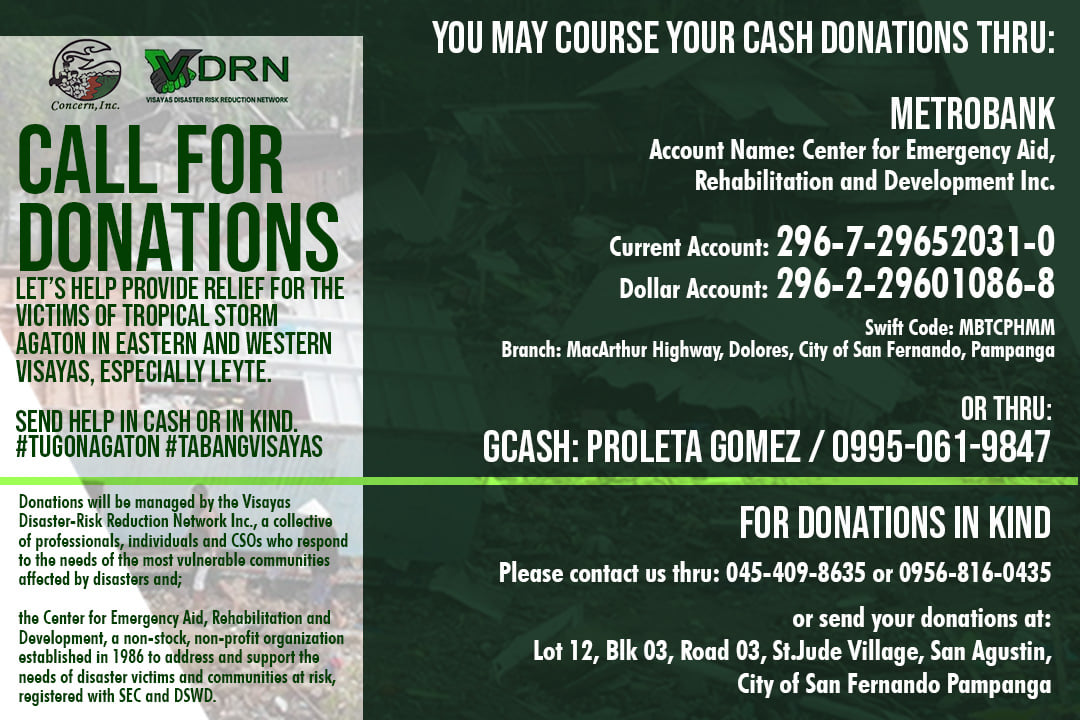
Donations will be managed by the Visayas Disaster-Risk Reduction Network Inc., a collective of professionals, individuals and CSOs who respond to the needs of the most vulnerable communities affected by disasters and;
the Center for Emergency Aid, Rehabilitation and Development, a non-stock, non-profit organization established in 1986 to address and support the needs of disaster victims and communities at risk, registered with SEC and DSWD.
Let’s help provide relief to our kababayans in Visayas.
Update as of April 15, 2022
CASUALTIES: 137
MISSING: 26
DISPLACED: 494,607 families or 1.6 million individuals / 218,310 displaced individuals are currently in 1,033 evacuation centers.
DAMAGED HOUSES and INFRASTRUCTURE: 9,622 houses and 43 infrastructure (Visayas and Mindanao)
DAMAGE TO AGRICULTURE:
P186 million (NDRRMC figures for Visayas and Mindanao)
P639.7 million (Dept. of AGriculture figures for Visayas and Mindanao)
Position Title: Communication Officer Project Title: Strengthening Civil Society for Inclusive democracy and Human Rights in Nepal and the Philippines “SAMA-SAMA Project” Location: Cebu City Reports To: Program Manager – Philippines Contract Type: Project-based, Full-time Duration: 1 year, renewable based on performance and project needs (July 2025 start)
1. Background
The Centre for International Studies and Cooperation (CECI), founded in 1958, promotes sustainable and inclusive development worldwide. Committed to poverty reduction and gender equality, CECI empowers women, girls, and vulnerable communities through innovative solutions in leadership, economic inclusion, governance, climate resilience, and peacebuilding. With operations in 17 countries across Africa, Asia, and the Americas, it has implemented over 350 projects, partnered with 400+ organizations, and engaged 440+ employees and volunteers globally. Our key priorities include (1) Women and Girls’ Rights – Advocating for equal opportunities, (2) Women’s Economic Empowerment – Strengthening skills for employment and entrepreneurship, (3) Climate Change Adaptation – Supporting communities in environmental resilience, and (4) Inclusive Governance & Peacebuilding – Promoting participatory governance in fragile contexts. CECI collaborates with key partners to drive transformative, gender-inclusive approaches and scale best practices. Its efforts in research, innovation, and international cooperation foster sustainable solutions to global challenges.
The Center for Emergency Aid, Rehabilitation and Development (CONCERN) Inc. is a non-stock, non-profit social welfare development organization formed in 1986 to comprehensively address and support the needs of disaster victims and communities at risk in the Philippines. CONCERN is a long-term partner of CECI in the Philippines. It works hand-in-hand with local communities, civil society organizations, government, with the support of partners, in strengthening the capacities in rights-based and gender-integrated disaster risk reduction and management.
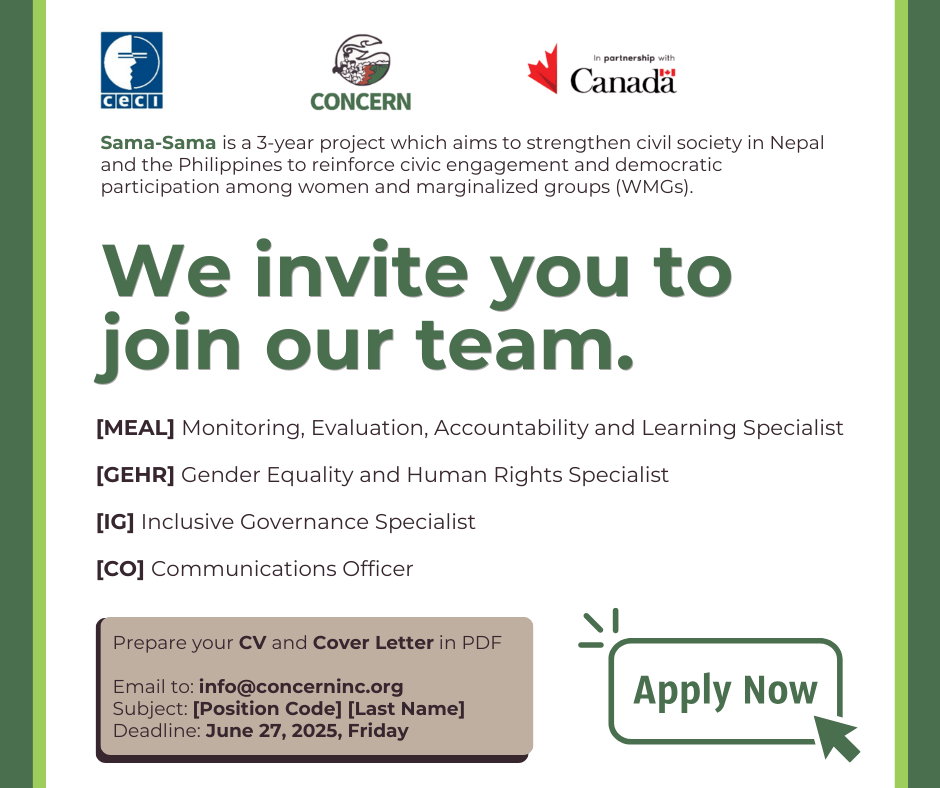
The Sama-Sama project is a 3-year development project implemented by CECI, with funding support from the Government of Canada, in partnership with Pro Public in Nepal and CONCERN in the Philippines, from March 2025 to December 2027. This initiative aims to strengthen civil society in Nepal and the Philippines to reinforce civic engagement and democratic participation among women and marginalized groups (WMGs).
In the Philippines, the project will be implemented in Eastern Samar, Metro-Cebu, Cagayan De Oro City, Iligan City, and the Bangsamoro Autonomous Region of Muslim Mindanao (BARMM). The project will be implemented in 12 LGUs across Nepal’s Madhesh and Lumbini provinces.
2. Position Overview
The Communication Officer will lead the design and execution of internal and external communication efforts, ensuring that the project’s achievements, messages, and advocacy campaigns reach the appropriate audiences in a clear, engaging, and strategic manner.
3. Duties and Responsibilities
Develop and implement the project’s communication and visibility plan, integrating a gender equality and human rights lens across all content and messaging.
Create inclusive and accessible content for press releases, newsletters, social media, website updates, reports, and other communication materials, ensuring diverse representation and adherence to ethical standards
Design and layout information, education and communication materials, reports, and modules.
Coordinate the production of multimedia content, including photos, videos, and infographics.
Manage and update the project’s social media platforms and website.
Ensure brand consistency and adherence to donor or partner communication guidelines.
Document project activities and success stories, highlighting outcomes and community impact.
Support the organization of public events, campaigns, workshops, and advocacy activities.
Liaise with the media and coordinate coverage of key project milestones.
Monitor and evaluate the effectiveness of communication efforts and suggest improvements.
Support internal communications to ensure consistent messaging and timely information sharing within the project team and with partners.
Safeguard sensitive information and comply with data protection and privacy regulations as the data protection focal person.
Perform other related tasks as may be assigned by the Program Manager.
Adhere to GAC, CECI and CONCERN Policies, and uphold CECI’s Code of Conduct, preventing exploitation, abuse, and harassment, Policy on the Protection of Children; Policy Against Corruption; Policy on Data Protection, while fostering diversity, equity, and inclusivity.
4. Qualifications and Experience
Bachelor’s degree in Communications, Journalism, Public Relations, Development Studies, or a related field.
At least 3 years of experience in a communications, advocacy, or marketing role, preferably in a development or NGO setting.
Excellent writing, editing, and storytelling skills.
Proficiency in using digital communication tools, social media platforms, website, and basic graphic or video editing software.
Strong organizational and interpersonal skills.
Familiarity with the project’s thematic areas is an advantage.
5. Reporting and Supervision
The Communication Officer will report to the Program Manager and work closely with the Communication Specialist in Montreal and other project staff to align communication outputs with project goals.
6. Work Conditions and Logistics
Duty station: Cebu City
Transportation allowance for official activities, communication allowance, and a work laptop will be provided.
Statutory benefits (SSS, PhilHealth, Pag-IBIG, 13th Month Pay, Leave Credits) and HMO/insurance will be provided.
REFERENCE AND VETTING PROCEDURE
CECI / CONCERN Inc. conducts comprehensive background and reference checks, emphasizing protection and safeguarding. Candidates must provide contact details for three references, who will only be contacted with explicit consent.
APPLICATION
Submit your Cover Letter and CV/resume to info@concerninc.org with subject [PH CO] [Last Name] on or before June 27, 2025, Friday.
CONCERN is an equal opportunity employer. We encourage applications from women and marginalized groups, including people with disabilities. Reasonable accommodation for people with disabilities are available upon request for candidates participating in every step of the hiring process.
All project team members in Nepal, Regional Team Leader-Asia, Project Officer- Montreal
External Relationships
Partners, donors, and government stakeholders in the Philippines
Travel Requirement
Frequent travel to the project provinces in Philippines
Duration:
1 year, renewable based on performance and project needs (July 2025 start)
1. Introduction
The Centre for International Studies and Cooperation (CECI), founded in 1958, promotes sustainable and inclusive development worldwide. Committed to poverty reduction and gender equality, CECI empowers women, girls, and vulnerable communities through innovative solutions in leadership, economic inclusion, governance, climate resilience, and peacebuilding. With operations in 17 countries across Africa, Asia, and the Americas, it has implemented over 350 projects, partnered with 400+ organizations, and engaged 440+ employees and volunteers globally. Our key priorities include (1) Women and Girls’ Rights – Advocating for equal opportunities, (2) Women’s Economic Empowerment – Strengthening skills for employment and entrepreneurship, (3) Climate Change Adaptation – Supporting communities in environmental resilience, and (4) Inclusive Governance & Peacebuilding – Promoting participatory governance in fragile contexts. CECI collaborates with key partners to drive transformative, gender-inclusive approaches and scale best practices. Its efforts in research, innovation, and international cooperation foster sustainable solutions to global challenges.
The Center for Emergency Aid, Rehabilitation and Development (CONCERN) Inc. is a non-stock, non-profit social welfare development organization formed in 1986 to comprehensively address and support the needs of disaster victims and communities at risk in the Philippines. CONCERN is a long-term partner of CECI in the Philippines. It works hand-in-hand with local communities, civil society organizations, government, with the support of our partners, in strengthening the capacities in rights-based and gender-integrated disaster risk reduction and management.
Background
The Sama-Sama project is a 3-year development project implemented by the CECI, with funding support from the Government of Canada, in partnership with Pro Public in Nepal and CONCERN in the Philippines, from March 2025 to December 2027. This initiative aims to strengthen civil society in Nepal and the Philippines to reinforce civic engagement and democratic participation among women and marginalized groups (WMGs). In the Philippines, the project will be implemented in Eastern Samar, Metro-Cebu, Cagayan De Oro City, Iligan City, and the Bangsamoro Autonomous Region of Muslim Mindanao (BARMM). The project will be implemented in 12 LGUs across Nepal’s Madhesh and Lumbini provinces.
2. Position Overview
The IG Officer will support the project by developing and overseeing the implementation of the country-level governance strategy, ensuring that the project staff and partners are capable of collaborating with the government towards inclusion, and providing technical and policy advice.
In collaboration with the project team in the Philippines and Nepal, the Inclusive Governance Specialist will provide strategic and technical leadership to ensure the integration of inclusive governance principles across all project components. The role involves capacity building, policy advocacy, stakeholder engagement, and the development of inclusive governance frameworks that promote the participation of women and marginalized groups in democratic processes.
3. Duties and Responsibilities
Capacity building
Design and deliver training and orientation to support the project staff and partners in governance and policy matters.
Facilitate participatory processes that enhance the voice and agency of WMGs in decision-making.
Develop tools, guidelines, and training materials on inclusive governance and civic engagement.
Technical advice and support
Develop an inclusive governance strategy for the SAMA-SAMA Project in the Philippines, ensuring alignment with project objectives and focusing on opportunities and mechanisms for enhanced participation of women and marginalized groups in governance processes.
Guide the implementation of the governance strategy in the Philippines.
Provide technical advice and support to project staff, partners, and consultants on governance practices and policy matters.
Review policy briefs, position papers, advocacy materials, and reports to ensure accuracy and quality.
Provide technical inputs to the design of project plans, tools, and materials
Collaboration and partnerships
Collaborate closely with the project’s Gender Equality and Human Rights (GEHR) Officer in the Philippines the MEAL specialist, as well as the IG and GEHR specialist in Nepal for complementarity in the provision of technical support to enhance project activities implementation and outcomes;
Ensure liaison with other I/NGOs implementing similar initiatives in the country, for knowledge sharing and potential collaboration.
Monitoring, Evaluation & Learning
Contribute to the documentation of learning and innovations in the field of gender-responsive inclusive governance and the project’s annual workplans and narrative reports;
Facilitate and conduct knowledge-sharing initiatives to enhance understanding of gender-responsive inclusive governance;
Participate to semi-annual and annual review processes;
Contribute to ensure strict compliance with CECI’s and CONCERN’s Codes of Conduct and Protection policies by project teams, partners and consultants;
Perform other related tasks as may be assigned by the Program Manager.
SAFEGUARDING AND ETHICS
Adhere to CECI’s and CONCERN’s procedures, policies, and security guidelines.
Promote security awareness and ensure compliance with relevant procedures for team members and partners.
Uphold CECI’s Code of Conduct, preventing exploitation, abuse, and harassment, Policy on the Protection of Children; Policy Against Corruption; Policy on Data Protection, while fostering diversity, equity, and inclusivity.
4. Qualifications
Advanced university degree in governance, leadership, and democracy studies, law, political science, international development, gender studies, or a related field
At least 10 years of experience in governance, policy engagement, or related fields, preferably in an I/NGO
Strong understanding of inclusive governance, gender quality and human rights frameworks
Experience working with local governments, civil society organizations and marginalized communities in the Philippines particularly in the project’s target areas (Eastern Samar, Metro-Cebu, Cagayan De Oro City, Iligan City, and/or the BARMM)
Prior experience working on major projects related to inclusive governance, federalism, democratic outreach, civic engagement, and capacity development
Skilled in partner capacity strengthening, staff training, and mentoring project teams
Strong analytical and strategic planning capabilities and resource management abilities to drive successful project delivery
Excellent analytical, communication and facilitation skills
Ability to work in a multidisciplinary and multicultural team
Proficiency in information and computer technology (Word, Excel, PowerPoint, Google and Microsoft 365 environments
5. Work Conditions and Logistics
Transportation allowance for official activities, communication allowance, and a work laptop will be provided.
Statutory benefits (SSS, PhilHealth, Pag-IBIG, 13th Month Pay, Leave Credits) and HMO/insurance will be provided.
CECI/ CONCERN Inc. is an equal opportunity employer. We encourage applications from women and marginalized groups, including people with disabilities. Reasonable accommodation for people with disabilities are available upon request for candidates participating in every step of the hiring process.
REFERENCE AND VETTING PROCEDURE
CECI conducts comprehensive background and reference checks, emphasizing protection and safeguarding. Candidates must provide contact details for three references, who will only be contacted with explicit consent.
APPLICATION
Submit your Cover Letter and CV/resume to info@concerninc.org with subject [PH IG] [Last Name] on or before June 27, 2025, Friday.
Gender Equality and Human Rights (GEHR) specialist
Contract type
Project-based, Full-time
Workstation
Cebu City
Supervisor
Program Manager – Philippines
International Relationships
All project team members in Nepal, Regional Team Leader-Asia, Project Officer- Montreal
External Relationships
Partners, donors, and government stakeholders in Philippines
Travel Requirement
Frequent travel to the project provinces in Philippines
Duration:
1 year, renewable based on performance and project needs (July 2025 start)
1. Introduction
The Centre for International Studies and Cooperation (CECI), founded in 1958, promotes sustainable and inclusive development worldwide. Committed to poverty reduction and gender equality, CECI empowers women, girls, and vulnerable communities through innovative solutions in leadership, economic inclusion, governance, climate resilience, and peacebuilding. With operations in 17 countries across Africa, Asia, and the Americas, it has implemented over 350 projects, partnered with 400+ organizations, and engaged 440+ employees and volunteers globally. Our key priorities include (1) Women and Girls’ Rights – Advocating for equal opportunities, (2) Women’s Economic Empowerment – Strengthening skills for employment and entrepreneurship, (3) Climate Change Adaptation – Supporting communities in environmental resilience, and (4) Inclusive Governance & Peacebuilding – Promoting participatory governance in fragile contexts. CECI collaborates with key partners to drive transformative, gender-inclusive approaches and scale best practices. Its efforts in research, innovation, and international cooperation foster sustainable solutions to global challenges.
The Center for Emergency Aid, Rehabilitation and Development (CONCERN) Inc. is a non-stock, non-profit social welfare development organization formed in 1986 to comprehensively address and support the needs of disaster victims and communities at risk in the Philippines. CONCERN is a long-term partner of CECI in the Philippines. It works hand-in-hand with local communities, civil society organizations, government, with the support of partners, in strengthening the capacities in rights-based and gender-integrated disaster risk reduction and management.
2. Background
The Sama-Sama project is a 3-year development project implemented by the CECI, with funding support from the Government of Canada, in partnership with Pro Public in Nepal and CONCERN in the Philippines, from March 2025 to December 2027. This initiative aims to strengthen civil society in Nepal and the Philippines to reinforce civic engagement and democratic participation among women and marginalized groups (WMGs).
In the Philippines, the project will be implemented in Eastern Samar, Metro-Cebu, Cagayan De Oro City, Iligan City, and the Bangsamoro Autonomous Region of Muslim Mindanao (BARMM). The project will be implemented in 12 LGUs across Nepal’s Madhesh and Lumbini provinces.
2. Position Overview
The GEHR specialist will be responsible for ensuring the effective mainstreaming of the project’s gender equality and human rights strategy. This includes providing technical support to project staff, and partners, and ensuring that project activities reflect and promote the principles of gender equality and human rights.
3. Duties and Responsibilities
Capacity building
Design and deliver training and orientation to support the project staff and partners on Gender equality and human rights matters.
Facilitate participatory processes that enhance the voice and agency of WMGs in decision-making.
Develop tools, guidelines, and training materials on inclusive governance and civic engagement.
Regularly assess application of acquired knowledge, make adjustments if necessary, and provide refresher training and orientation as required.
Technical advice and support
Ensure the implementation at the country-level of the project’s gender equality and human rights (GEHR) strategy, building on the PIP GEHR Strategy and the Gender-Based Analysis from an intersectional perspective (GBA+).
Ensure the integration of GEHR considerations into all project activities, including the related risks and mitigation measures.
Provide technical inputs to the design of project plans, tools, and materials to ensure inclusivity.
Ensure the integration of GEHR considerations into all project activities, including the related risks and mitigation measures.
Provide technical inputs to the design of project plans, tools, and materials more specifically by:
Collaboration and partnerships
Collaborate closely with the project’s Inclusive Governance Officer in the Philippines, the MEAL specialist, as well as the IG and GEHR specialist in Nepal for complementarity in the provision of technical support to enhance project activities implementation and outcomes, exchanges and learning on methodologies and approaches;
Ensure liaison with other I/NGOs implementing similar initiatives in the country, for knowledge sharing and potential collaboration.
Monitoring, Evaluation & Learning
Contribute to the documentation of learning and innovations in the field of gender-responsive inclusive governance and the project’s annual workplans and narrative reports;
Facilitate and conduct knowledge-sharing initiatives to enhance understanding of gender-responsive inclusive governance;
Participate to semi-annual and annual review processes;
Perform other related tasks as may be assigned by the Program Manager.
Safeguarding and Ethics
Adhere to CECI’s and CONCERN procedures, policies, and security guidelines.
Promote security awareness and ensure compliance with relevant procedures for team members and partners.
Uphold CECI’s Code of Conduct, preventing exploitation, abuse, and harassment, Policy on the Protection of Children; Policy Against Corruption; Policy on Data Protection, while fostering diversity, equity, and inclusivity.
4. Qualifications
Advanced university degree in gender studies, political science, international development, or a related field
At least 10 years of experience in GEHR or related fields, preferably in an I/NGO
Strong understanding of inclusive governance, gender quality and human rights frameworks
Experience working with local governments, civil society organizations and marginalized communities in the Philippines particularly in the project’s target areas (Eastern Samar, Metro Cebu, Cagayan De Oro City, Iligan City, and/or the BARMM)
Prior experience working on major projects related to inclusive governance, civic engagement, and capacity development
Skilled in partner capacity strengthening, staff training, and mentoring project teams
Strong analytical and strategic planning capabilities and resource management abilities to drive successful project delivery
Excellent analytical, communication and facilitation skills
Ability to work in a multidisciplinary and multicultural team
Proficiency in information and computer technology (Word, Excel, PowerPoint, Google and Microsoft 365 environments
5. Reporting and Supervision
The GEHR specialist will report directly to the Program Manager and will coordinate closely with the GEHR specialist based in Nepal and the Gender Specialist based in Montreal, other project staff and partners.
6. Work Conditions and Logistics
Transportation allowance for official activities, communication allowance, and a work laptop will be provided.
Statutory benefits (SSS, PhilHealth, Pag-IBIG, 13th Month Pay, Leave Credits) and HMO/insurance will be provided.
CECI / CONCERN Inc. is an equal opportunity employer. We encourage applications from women and marginalized groups, including people with disabilities. Reasonable accommodation for people with disabilities are available upon request for candidates participating in every step of the hiring process.
REFERENCE AND VETTING PROCEDURE
CECI / CONCERN Inc. conducts comprehensive background and reference checks, emphasizing protection and safeguarding. Candidates must provide contact details for three references, who will only be contacted with explicit consent.
APPLICATION
Submit your Cover Letter and CV/resume to info@concerninc.org with subject [PH GEHR] [Last Name] on or before June 27, 2025, Friday.
Monitoring, Evaluation, Accountability, and Learning (MEAL) specialist
Contract type
Project-based, Full-time
Workstation
Cebu City
Supervisor
Program Manager – Philippines
International Relationships
All project team members in Nepal, Regional Team Leader-Asia, Project Officer in Canada
External Relationships
Partners, donors, and government stakeholders in the Philippines
Travel Requirement
Frequent travel to the project areas in the Philippines
Duration
1 year, renewable based on performance and project needs (July 2025 start)
1. Introduction
The Centre for International Studies and Cooperation (CECI), founded in 1958, promotes sustainable and inclusive development worldwide. Committed to poverty reduction and gender equality, CECI empowers women, girls, and vulnerable communities through innovative solutions in leadership, economic inclusion, governance, climate resilience, and peacebuilding. With operations in 17 countries across Africa, Asia, and the Americas, it has implemented over 350 projects, partnered with 400+ organizations, and engaged 440+ employees and volunteers globally. Our key priorities include (1) Women and Girls’ Rights – Advocating for equal opportunities, (2) Women’s Economic Empowerment – Strengthening skills for employment and entrepreneurship, (3) Climate Change Adaptation – Supporting communities in environmental resilience, and (4) Inclusive Governance & Peacebuilding – Promoting participatory governance in fragile contexts. CECI collaborates with key partners to drive transformative, gender-inclusive approaches and scale best practices. Its efforts in research, innovation, and international cooperation foster sustainable solutions to global challenges.
The Center for Emergency Aid, Rehabilitation and Development (CONCERN) Inc. is a non-stock, non-profit social welfare development organization formed in 1986 to comprehensively address and support the needs of disaster victims and communities at risk in the Philippines. CONCERN is a long-term partner of CECI in the Philippines. It works hand-in-hand with local communities, civil society organizations, government, with the support of our partners, in strengthening the capacities in rights-based and gender-integrated disaster risk reduction and management.
2. Background
The Sama-Sama project is a 3-year development project implemented by the CECI, with funding support from the Government of Canada, in partnership with Pro Public in Nepal and CONCERN in the Philippines, from March 2025 to December 2027. This initiative aims to strengthen civil society in Nepal and the Philippines to reinforce civic engagement and democratic participation among women and marginalized groups (WMGs). In the Philippines, the project will be implemented in Eastern Samar, Metro-Cebu, Cagayan De Oro City, Iligan City, and the Bangsamoro Autonomous Region of Muslim Mindanao (BARMM). The project will be implemented in 12 LGUs across Nepal’s Madhesh and Lumbini provinces.
2. Position Overview
The MEAL Specialist is responsible for developing and managing a gender-responsive, results-based MEAL system. This includes ensuring data quality, alignment with donor requirements, integration of accountability mechanisms, and facilitation of learning processes. The role supports evidence-based decision-making and works closely with partners to uphold ethical standards and promote continuous project improvement.
3. Duties and Responsibilities
The MEAL specialist shall be responsible for the following:
1.MEAL System Design and Oversight
Lead the development and implementation of a gender-responsive MEAL plan in collaboration with key stakeholders.
Regularly review and update the Performance Measurement Framework (PMF) to assess progress and ensure alignment with project objectives.
Coordinate with the MEAL Senior Advisor in Montreal and the MEAL specialist in Nepal to ensure quality assurance and consistency with MEAL standards.
2. Monitoring, Data Quality, and accountability
Consolidate and analyze project data on a monthly basis; conduct quarterly audits and quality checks.
Develop and maintain systems for tracking project performance, risk mitigation, and compliance.
Design, supervise, and support ethical and gender-sensitive data collection activities, ensuring confidentiality and informed consent.
Guide the development of tools to monitor project outcomes and stakeholder impact.
Integrate accountability mechanisms and feedback loops into MEAL systems to ensure responsiveness to beneficiaries.
5. Capacity Building and stakeholder Engagement
Design and deliver training and support plans on gender-responsive MEAL for project teams and partner organizations.
Co-organize annual and semi-annual review meetings with stakeholders
Gather and synthesize data from partners to contribute to high-quality semi-annual and annual narrative reports.
6. Learning and impact assessment
Facilitate knowledge-sharing and learning processes, including documentation and capitalization of project experiences.
Support the development of learning materials and best practice documentation, particularly during review and closure phases.
Review the quality and relevance of evaluation findings and ensure their integration into project strategy and decision-making.
Perform other related tasks as may be assigned by the Program Manager.
SAFEGUARDING AND ETHICS
Adhere to CECI’s and CONCERN’s procedures, policies, and security guidelines.
Promote security awareness and ensure compliance with relevant procedures for team members and partners.
Uphold CECI’s Code of Conduct, preventing exploitation, abuse, and harassment, Policy on the Protection of Children; Policy Against Corruption; Policy on Data Protection, while fostering diversity, equity, and inclusivity.
4. Qualifications
Bachelor’s degree in Statistics, MEAL, Social Sciences or a related field.
At least 10 years of experience in monitoring and evaluation of development projects, with at least 7 years in an INGO project.
Demonstrated experience in developing and implementing M&E systems within development organizations.
Expertise in participatory research methods, including participatory action and learning approaches.
Hands-on experience in field data collection, verification, and comprehensive report writing.
Experience in research, impact assessments, and learning events to enhance program effectiveness.
Strong communication skills and proficiency in MS Office applications (Word, Excel, PowerPoint) and their Google Workspace equivalent.
5. Reporting and Supervision
The MEAL Specialist will report directly to the Program Manager and will coordinate closely with the MEAL senior advisor in Montreal and other project staff and partners.
6. Work Conditions and Logistics
Transportation allowance for official activities, communication allowance, and a work laptop will be provided.
Statutory benefits (SSS, PhilHealth, Pag-IBIG, 13th Month Pay, Leave Credits) and HMO/insurance will be provided.
CECI/ CONCERN Inc. is an equal opportunity employer. We encourage applications from women and marginalized groups, including people with disabilities. Reasonable accommodation for people with disabilities are available upon request for candidates participating in every step of the hiring process.
REFERENCE AND VETTING PROCEDURE
CECI conducts comprehensive background and reference checks, emphasizing protection and safeguarding. Candidates must provide contact details for three references, who will only be contacted with explicit consent.
APPLICATION
Submit your Cover Letter and CV/resume to info@concerninc.org with subject [PH MEAL] [Last Name] on or before June 27, 2025 Friday.
GENDER-BASED ANALYSIS PLUS (GBA+)FOR STRENGTHENING CIVIL SOCIETY IN THE PHILIPPINES
March-May 2025
1. INTRODUCTION
The Centre for International Studies and Cooperation (CECI), founded in 1958, promotes sustainable and inclusive development worldwide. Committed to poverty reduction and gender equality, CECI empowers women, girls, and vulnerable communities through innovative solutions in leadership, economic inclusion, governance, climate resilience, and peacebuilding. With operations in 17 countries across Africa, Asia, and the Americas, it has implemented over 350 projects, partnered with 400+ organizations, and engaged 440+ employees and volunteers globally. Our key priorities include (1) Women and Girls’ Rights – Advocating for equal opportunities, (2) Women’s Economic Empowerment – Strengthening skills for employment and entrepreneurship, (3) Climate Change Adaptation – Supporting communities in environmental resilience, and (4) Inclusive Governance & Peacebuilding – Promoting participatory governance in fragile contexts. CECI collaborates with key partners to drive transformative, gender-inclusive approaches and scale best practices. Its efforts in research, innovation, and international cooperation foster sustainable solutions to global challenges. Since 1987, CECI has worked in Nepal across 66 districts within seven provinces, implementing 50+ projects in agriculture, MSMEs, governance, and gender equality, collaborating with governments, civil society, and the private sector. Learn more at www.ceci.org.
2. BACKGROUND OF THE PROJECT
The Philippines faces challenges in achieving gender parity in political representation despite constitutional mandates. Women hold fewer political positions, with limited representation in legislative bodies despite constitutional provisions. In addition, women and marginalized groups which include farmers, fisherfolks, Internally Displaced Populations (IDPs), and Muslim minorities, suffer disproportionately from climate change due to limited land rights and poor enforcement of laws. Consultations with key stakeholders and community members held in 2023 in both countries highlighted the need for increased gender responsive and inclusive civic education, empowerment initiatives and enhanced government-citizen collaboration.
3. PROJECT SUMMARY
The “Strengthening Civil Society in Nepal and the Philippines” project aims to reinforce civic engagement and democratic participation among WMGs. This endeavor prioritizes empowering WMGs to assert their fundamental human rights, participate in democratic processes, and secure representation through initiatives centered on citizen engagement, thereby reinforcing the commitment of governments and stakeholders to advancing peace, human and environmental rights, and inclusive governance.
CECI will manage the project in close collaboration with national partner CONCERN and provincial partners in the Philippines. In line with the participatory approach to the project’s design, several key stakeholders at the governmental and non-governmental levels will be engaged throughout the project’s implementation. The project will aim to achieve the following results:
The ultimate outcome: Improved equitable participation and representation of women and marginalized groups in the democratic space in Nepal and the Philippines (1000)
Intermediate outcomes:
Increased access to civic engagement opportunities for women and marginalized groups to defend human rights and democratic participation (1100)
Improved government-citizen collaboration promoting gender-transformative, inclusive public services and democratic participation for women and marginalized groups (1200)
Immediate outcomes:
Increased ability of women and marginalized groups to negotiate equitable and inclusive participation in political leadership and policy decisions at the local level (1110)
Enhanced capacity of CSOs, women’s rights groups, and feminist organizations to amplify WMG’s voice on civic and electoral agenda, environmental justice, and inclusive political processes (1120)
Increased opportunities for local government units to engage in dialogue with CS through digital accountability platforms to responsibly promote and provide equitable and inclusive information, incentives and services to WMGs (1210)
Improved capacity of CSOs and local government to collaborate around evidence-based data, advocacy for human rights, and democratic participation of WMGs while addressing violence against LEWR (1220)
Target groups:
This initiative will benefit more than 24,780 individuals in Visayas (Eastern Samar Province, Cebu Province) and in Mindanao (Misamis Oriental Province, Lanao Del Norte Province, and BARRM). These will be coming from WMGs where the largest group will be women (more than 14,868 women will benefit and more than 4,956 will be men). The target groups are women, men, young women, young men, LGBTQI+, Catholic, Muslim, urban poor (informal settler families and informal economy workers), rural poor (formers and fisherfolk) and internally displaced people. Additionally, the project will establish partnerships with key stakeholders, including civil society organizations (CSOs), women and marginalized groups (WMGs), national constitutional bodies, human rights commissions, academic and research institutions, and development partners.
4. PURPOSE AND OBJECTIVES OF THE ASSIGNMENT
Preliminary consultations
In 2024, CECI and CONCERN conducted focus group discussions (FGDs), key informant interviews (KIIs), and interactive workshops in the Philippines to gather inputs from various stakeholders. These consultations aimed to shape the project design by understanding gender disparities, inclusion challenges, and their root causes. Consultations engaged participants from target communities of marginalized groups, civil society organizations (CSOs), women’s organizations and local and federal government agencies. Overall, these consultations provided critical insights into gender and inclusion challenges, helping to refine project strategies for addressing systemic inequalities in both countries.
Purpose of the assignment
Building on the results of the preliminary consultations, CECI aims to hire a consultant(s) / consulting firm(s) in the Philippines to provide more in-depth gender-based analysis from an intersectional perspective (GBA+) using primary and secondary data. The results of the GBA+ will support the design of a Gender Equality and Human Rights (GEHR) strategy that will be aligned with the objectives targeted by the project and be integrated into Project Implementation Planning (PIP).
Specific objectives of the analysis
Using an intersectional lens, analyze how gender inequality manifests and informs power dynamics within the various marginalized groups targeted by the project and how it impacts women’s agencies in their community and the larger society.
Deepen the collection and analysis of relevant data on issues of gender equality, human rights, environmental rights and inclusive governance (both barriers and opportunities) experienced by women and marginalized groups (WMGs) in the Philippines.
Analyze the capacity of implementing partners to work with a gender perspective and achieve gender equality outcomes.
Based on the study’s findings, provide concrete recommendations to support the design of the GEHR strategy that will be integrated into the PIP.
5. METHODOLOGICAL APPROACH
Except for the number of stakeholders consulted (disaggregated by gender, age, ethnicity, disability status, and other key identity factors as relevant) and data collected through the literature review, this study will mainly gather and analyze qualitative information. Quantitative data will be collected through the baseline study.
The methodology for the GBA+ will be comprised of:
A Literature review
Semi-structured interviews with key stakeholders (ensure a minimum of 30 percent women representation)
Focus group discussions with community members (women, men, girls and boys)
The methodology described in the technical proposal submitted for this assignment should provide explicit details on the process for selecting respondents for the data collection and how key ethical issues related to the data collection, analysis, and dissemination processes will be addressed.
A dynamic, participatory, and feminist approach will have to be used during this study’s consultation phase, allowing for flexibility to ensure women’s effective participation and providing them the space to speak freely. The data collection approach and specific tools used to establish should be adapted to the local contexts to ensure the appropriateness and reliability of the data collected. This strategy will promote collecting key information that will feed into the project’s GEHR strategy by ensuring that the activities implemented will be gender transformative and inclusive.
Particular attention will need to be given to disaggregating the data collected and analyzed by gender and other relevant variables that may constitute vulnerability factors (e.g., age group, ethnocultural minority, people with disabilities).
The GBA+ process will have to be implemented considering the Baseline Assessment that will be carried out for each site targeted by the project. Harmonization of these analyses will be necessary to ensure consistency and complementarity in their integration into the PIP. This GBA+ and separate assignment of Baseline Assessment–two studies will provide a rich database that will inform the Performance Measurement Framework (PMF) and enable robust project implementation monitoring.
6. GUIDING QUESTIONS
The following are some questions to be considered within the GBA+ (this list is not exhaustive):
What are the power, gender and diversity dynamics within the targeted population(s) of the project? This includes between and among diverse women and men, young women and young men? Who are the most marginalized between and among them?
How are disparities along gender lines influenced by other intersecting identity factors such as sex, age, class, income, language, geography, religion, ethnicity, sexual orientation, and physical and mental abilities?
What are the gender roles, workload, and division of labour in household and income-generating activities in the project target sites? Including the caregiving/unpaid work of women and young women at both household and community level? How can the intervention challenge the existing gender division of labour, tasks, responsibilities and opportunities?
What are the patterns of power dynamics and decision-making at the household level across gender lines? What are the challenges regarding access to and/or control over resources and assets by women and young women? Cultural (customary law surrounding marital and inheritance practices), economic (access to finance), etc.?
What are the impacts (differentiated by gender, age, disability, etc.) and to what level do marginalized groups, and particularly women, participate in environmental decision-making related to disaster risk reduction and management (DRRM) initiatives and climate change adaptation (CCA) plans?
How do gendered power relations at community level impact women’s leadership in the public sphere? What opportunities exist to enable women’s civic engagement and participation in local governance? What obstacles (such as gender-based violence) hinders their political leadership and how can they be addressed?
How do feminist, women rights and other women-led CSOs, particularly the ones representing marginalized groups, participate and influence political processes at the local level? What barriers do they encounter and what opportunities can be leveraged?
What are the risks (including backlash) in working on the identified gender equality and human rights barriers and what strategies can be applied to minimize these risks?
What are the capacity gaps of project implementing partners and the various project stakeholders that hinder advancing gender equality, human rights and inclusive governance, and how can the project fill those gaps?
What specific ways can be proposed for encouraging and enabling women, particularly the ones from marginalized groups, to participate in the project?
What are the links between the project’s interventions and other actions promoting gender equality and inclusive governance led by organizations (both governmental and non-governmental) at the national, regional and local levels in the Philippines?
7. SCOPE OF THE STUDY
This study will build on the findings of the previous preliminary consultations conducted in the Philippines to inform the project design. The geographic scope of GBA+ will be aligned with the project areas of the project in the Philippines. Details on the mapping process for identifying key stakeholders, women’s groups, other CSOs, and community members consulted for this study will vary, considering the consultations previously led in the Philippines and the mapping conducted for the baseline study. This will determine the exact number and profile of stakeholders to be consulted on each project site. Care should also be given to avoid consultation fatigue in communities targeted for the GBA+ and baseline study. Focus will be given to stakeholders and organizations not consulted previously.
8. TIMELINE AND EXPECTED DELIVERABLES
8.1 TENTATIVE TIMELINE
GBA+ will last 30 working days and offer a focused timeline for the Consultant(s) / Consulting firm(s) to deliver the deliverables for the GBA+ analysis.
DATE
KEY MILESTONE
SPECIFIC DELIVERABLE
DAYS
April 7-9
Preliminary meeting with selected consultant/consulting firm
Document and desk reviews and tentative field schedule
3 days
April 10-13
Finalize the baseline design/methods Prepare field schedule
GBA+ tools/Questionnaires Field data collection schedule
4 days
April 14-16 April 21-27
Field consultation and data collection by consultant/ consulting firm
Raw data sets from project participants/ respondents, KII and FGD notes with stakeholders and partners
10 days
April 28 – May 2
Data validation meeting with CECI and national partners Preliminary GBA+ reports ready
Draft GBA+ report submitted to CECI and national partners
6 days
May 9
Final report with annexes
Final report in prescribed format
7 days
8.2 EXPECTED DELIVERABLES
Based on the methodology mentioned above, the key deliverables expected are as follows:
Literature review
Annotated bibliography with recent texts. The literature review must be precise and ensure the quality of the analysis regarding the project’s topic. The GBA+ report must include information sources of all citations and references.
Data gathering process
Adapted data collection tools: Questionnaires (per type of key informant) and facilitation guides for FGDs (per focus group profile);
List and number of all stakeholders consulted through KIIs disaggregated by gender (contact person, title, name of organization/structure, brief description of the organization/structure);
Filled out questionnaires for each KII and a summary of each interview;
List and number of participants of FGDs disaggregated by gender, age, ethnicity, religion, disability status, and other key identity factors that may be relevant to the project;
Brief report of each FGD containing the collated response to the questions and relevant quotes from participants.
Data collection tools will be shared with the teams involved in implementing the project’s Baseline Assessment for the PIP to share and find complementarity between the tools used for the different analyses and avoid duplication in the data collected. The foreseen approach for the GBA+ and baseline assessment is to organize FGDs at the community level in different localities to avoid multiplying consultations in the same communities. The Consultant/consulting firm recruited to conduct the GBA+ will adapt these guides to the local context and translate them as needed, particularly to facilitate FGDs.
Data Analysis and production of the report
Data collected will be cross-referenced with the data from the first consultations, analyzed using a gender analysis matrix and presented in a country-level report. The report will comprise key recommendations for the design of the project’s GEHR Strategy. The GBA+ report will need to include the following:
Executive summary (3-4 pages including conclusion and recommendations)
Introduction
Aim and objectives of the analysis
Methodology
Cover page
Table of contents, acronyms, abbreviations, and a list of tables/charts.
Executive summary (3-4 pages) with key findings and recommendations.
Background and context analysis.
Methodology detailing sampling, limitations, participant selection, and data analysis.
Study findings with data presented in graphs/charts as needed
Conclusion and recommendations for the design of the GEHR
Bibliography/References of documents consulted
Appendices, including survey tools, interviewee lists, FGD participants’ lists, summaries of interviews and FGDs, results of the preliminary analysis of the institutional gender capacities of project partners, etc.
The reports must be in Word and PDF format and include an Executive Summary, raw data files, and other annexes.
9. CECI’S RESPONSIBILITIES
To provide relevant documentation and answer the consultants’ / consulting firms’ questions throughout the mandate period.
To mobilize the necessary team to support the consultants/consulting firms and designate a person responsible for facilitating at CECI in the Philippines and Canada.
To provide the Consultants/consulting firms with feedback/comments on the various documents produced, according to the approved writing plan.
To provide the Consultants/consulting firms with any support deemed necessary to accomplish this mandate.
10. CONSULTANTS’ QUALIFICATIONS
The Applicant should possess a graduate degree in gender studies, social sciences, political science, human rights, development studies, international development, or a related field, focusing on the Indo-Pacific region, especially the Philippines.
The Applicant should have at least 5-7 years of professional experience, including at least 5 years of conducting gender analyses required.
Relevant research experience in gender equality, women’s rights, human rights of marginalized groups, political and civic engagement, and/or environmental rights, with a proven track record in research, monitoring, and evaluation required.
The Applicant must have strong knowledge of decentralization and local governance processes in the Indo-Pacific region, particularly the Philippines.
Experience developing data collection tools, conducting interviews and facilitating Focus Group Discussions while maintaining cultural sensitivity is needed.
Fluency in English and Filipino is required, and knowledge of other local languages spoken in the target areas is an asset.
Strong research, analytical and writing skills in English are necessary, as English writing skills are critical for this consultancy.
It is essential to be flexible with time and work schedules and to meet tight deadlines (as outlined in the TORs).
The capability to recruit and train a network of local researchers to assist with the data collection process is required.
Ability to read, comprehend, and analyze large amounts of technical information, provide concise summaries, and explain its significance is required.
Knowledge and understanding of Canada’s Feminist International Assistance Policy (FIAP) and the Feminist International Assistance Gender Equality Toolkit for Projects are assets.
11. ETHICAL STANDARDS, CONFIDENTIALITY, AND PROPRIETARY RIGHTS
The Consultant or Consulting Firm must adhere to ethical standards throughout the assignment, including maintaining confidentiality of interviewee statements when required and avoiding judgmental comments about stakeholders. During and after the assignment, the consultant must not disclose any proprietary or confidential information related to the service without prior written consent from CECI. All materials and documents produced under this assignment will be the property of CECI.
12. APPLICATIONS
To apply, interested candidates (individuals or firms) are required to submit:
A Curriculum Vitae (for individuals or teams);
A technical proposal outlining the detailed methodology for the GBA+ clearly demonstrating a thorough understanding of these TORs and a detailed calendar of implementation;
A financial offer for completing the deliverables mentioned above with a detailed breakdown of costs for the study (itemized consultancy fees/costs, itemized field data collection expenses, Itemized administrative expenses);
Names and contact information of three references who can be contacted regarding recent relevant experience;
A copy of previous reports of similar recent work undertaken and
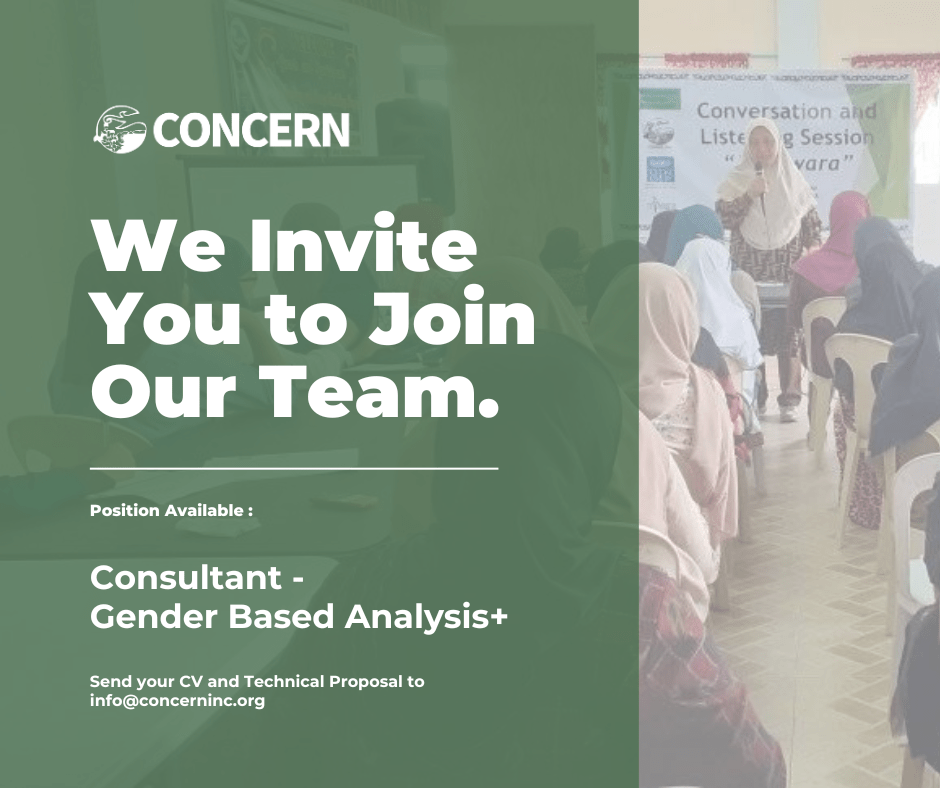
A brief cover letter to the following email addresses: info@concerninc.org (Philippines) and nancy.degraff@ceci.ca (Montreal) by 11:59 PM Saturday, April 5, 2025 (Philippines Time).
Consultants or firms seeking clarification on the TOR can send their questions to nancy.degraff@ceci.ca and info@concerninc.org before the submission deadline. Only those selected consultants or consulting firms will be invited to formal discussions and contractual agreements with CECI. Please note that CECI reserves the right to reject any applications that do not meet the minimum standards specified in the TOR.
CECI’s initiatives aim to address inequalities and foster sustainable development worldwide. The work ethic of our staff, volunteers, consultants, representatives, and partners must align with the organization’s values and mission. We encourage applications from women, persons with disabilities, ethnic minorities, and other marginalized groups.
Director of Project Management and Quality Assurance/ Asia Regional Director
International Relationships
All members of the project team in Nepal and the Philippines, Team Leader/Country Representative in Nepal, and global and country Finance and Operations teams
ExternalRelationships
Partners, donors and government stakeholders in the Asia region
ABOUT CECI The Centre for International Studies and Cooperation (CECI), founded in 1958, promotes sustainable and inclusive development worldwide. Committed to poverty reduction and gender equality, CECI empowers women, girls, and vulnerable communities through innovative solutions in leadership, economic inclusion, governance, climate resilience, and peacebuilding. With operations in 17 countries across Africa, Asia, and the Americas, it has implemented over 350 projects, partnered with 400+ organizations, and engaged 440+ employees and volunteers globally.
Our key priorities include (1) Women and Girls’ Rights – Advocating for equal opportunities, (2) Women’s Economic Empowerment – Strengthening skills for employment and entrepreneurship, (3) Climate Change Adaptation – Supporting communities in environmental resilience, and (4) Inclusive Governance C Peacebuilding – Promoting participatory governance in fragile contexts. CECI collaborates with key partners to drive transformative, gender-inclusive approaches and scale best practices. Its efforts in research, innovation, and international cooperation foster sustainable solutions to global challenges. Learn more at http://www.ceci.org.
OUR VALUES
CECI is dedicated to creating an egalitarian and inclusive world without poverty. Our core values guide our mission and actions:
Cooperation: We believe in the power of collaboration and promote partnerships between individuals and nations through intercultural exchange and international solidarity.
Respect: We honour the dignity, diversity, and rights of all individuals, ensuring that our actions reflect consideration and appreciation for different perspectives.
Equity: We are committed to fairness and justice, striving to eliminate barriers and create opportunities for all, especially marginalized communities.
Commitment: We dedicate ourselves wholeheartedly to our mission, demonstrating unwavering resolve in addressing global challenges.
Integrity: We act honestly and transparently, upholding ethical standards in all our endeavours.
POSITION OVERVIEW CECI is launching a regional Indo-Pacific initiative covering Nepal and the Philippines, “Strengthening Civil Society in Nepal and the Philippines.” To lead this 36-month GAC-funded project, we seek an experienced Team Leader to drive efforts in inclusive governance, human rights protection, and gender equality, contributing to the region’s sustainable and inclusive economic growth. The Regional Team Leader will act as CECI representative for the region and will be key in shaping and leading CECI’s expanding programs in Asia. This position requires a seasoned leader responsible for managing project cycles in Nepal and the Philippines while steering strategy, ensuring project performance and quality, overseeing teams, fostering program development, representing CECI, and ensuring compliance with quality, accountability, security, and regulatory standards.
ESSENTIAL RESPONSIBILITIES
A. Project Management and Quality Assurance in the Philippines and Nepal
Provide leadership in the project’s planning, implementation, and technical operations, ensuring strategic alignment, teamwork, and prioritization.
Oversee the project’s setup and the development of Project Implementation Plan and project deliverables, including work plans and reporting requirements, ensuring compliance with organizational, host government, and donor guidelines.
Manage the project’s cycles in the Philippines and Nepal – in close collaboration with the Project’s Team Leader in Nepal – assigning tasks, tracking progress, and addressing risks and challenges.
Ensure adherence to donor regulations, organizational policies, and government requirements while maintaining program quality, compliance, and effectiveness.
Support project teams in monitoring project and partner performance while promoting gender-sensitive and gender-transformative programming.
Oversee the development, implementation, and enhancement of Monitoring Evaluation
Accountability and Learning (MEAL) program quality tools and measures to ensure technical excellence and compliance with required standards.
Maintain structured project management with timely implementation, risk management, quality deliverables, and compliant reporting in line with government, donor, and organizational requirements.
Provide financial oversight, managing budgets, mitigating financial risks, and securing approvals for necessary budget adjustments.
Ensure compliance with government agreements, contractual obligations, and regulatory requirements.
Collect, consolidate, and review project data in alignment with monitoring and evaluation standards.
Promote knowledge sharing through documentation, workshops, and the application of lessons learned.
B. Project Team Coordination in the Philippines and Nepal The following tasks will be accomplished in close collaboration with the Country Representative/ Team Leader/ based in Nepal:
Establish and monitor Key Performance Indicators (KPIs), conduct periodic reviews, and hold regular check-ins to ensure effective team performance management.
Provide mentorship and capacity-building support to enhance team capabilities and professional growth.
Supervise and support project staff by tracking performance data and offering guidance as needed.
Organize teams and develop standard operating procedures to ensure project efficiency, success, and compliance.
Guide and develop team members, fostering motivation, collaboration, and continuous learning.
D. Program Support and Representation in matter of inclusive governance and other themes
Cultivate and sustain strong relationships with CSOs, implementing partners, donors, government authorities, private sector actors, and local/international organizations across Asia, collaborating with the Asia Regional Director, Country Representatives, and regional teams.
Strengthen CECI’s strategic positioning and identify new partnership opportunities by working with country, regional, and global program development teams to explore initiatives and resource mobilization opportunities.
Represent CECI at regional coordination meetings, contributing to advocacy, technical discussions, and policy dialogues as assigned.
Collaborate with government agencies, donors, and partners to align initiatives, coordinate activities, and ensure effective project monitoring and reporting.
E. Safeguarding and Ethics in the Philippines and Nepal
Ensure full compliance with CECI’s procedures, policies, and security guidelines set by regional and country leadership.
Proactively maintain a secure environment for team members, ensuring awareness and adherence to relevant procedures and policies.
Uphold CECI’s Code of Conduct and ethical rules, ensuring key CECI protection policies are applied to ensure the prevention of sexual exploitation, abuse, and harassment while fostering a safe and inclusive work environment for all team members and partners.
Ensure adherence to local laws, customs, and regulations as regional and country leadership informs.
MINIMUM REQUIREMENTS
7–10 years of management experience, with expertise in project cycle management, quality assurance, innovative project design, assessment, evaluation, reporting and grants management.
Advanced University degree in development economics, social sciences, international development, public policy, gender studies, human rights, project management, or a master’s degree in a related field.
Strong demonstrated knowledge and experience in inclusive governance and the promotion of democracy applying GESI concepts and rights-based approaches.
Proven experience in donor engagement and managing international consortiums, with multiple donor experiences (e.g., GAC, USAID, FCDO, EC, ECHO, and UN agencies).
Demonstrated experience working in Asia, particularly in the Philippines and/or Nepal, managing multidisciplinary and multicultural teams, and collaborating with diverse stakeholders.
Successful track record in managing donor-funded projects, ensuring compliance across their entire cycle from inception to evaluation.
Strong analytical and strategic planning capabilities, with a deep understanding of project cycles, humanitarian and development nexus, and issues relevant to inclusive governance, democratic participation, gender equality and women’s empowerment in the Indo-Pacific region.
Experience professionally representing organizations and negotiating with government bodies, local organizations, and other key stakeholders.
Skilled in strengthening partner capacities, providing staff training, and mentoring teams.
Strong critical thinking and resource management abilities to drive successful project delivery and completion.
Highly adaptable to dynamic environments, shifting priorities, and evolving stakeholder needs. Comfortable navigating uncertainty, proactively addressing challenges, and fostering innovation to achieve impactful project outcomes.
Excellent verbal and written communication skills in English (proficiency in French is an asset), with the ability to multitask, organize, and prioritize effectively.
WE OFFER
Contract type: Full-time
Contract duration: 1 year initial, renewable based on performance
Expected start date: 15 April 2025 (mutually confirmed)
Duty station: City of San Fernando, Pampanga, Philippines
Travel requirement: within the Philippines and Nepal, with some travel to the target project provinces and occasional travel to Canada.
APPLICATION PROCESS To apply, please submit your CV along with a cover letter (in English) that highlights your relevant skills, experience, and qualifications, explaining how they align with the role and why you are an ideal candidate.
You can submit your application to marcelm@ceci.ca (cc: info@concerninc.org) by 6 April 2025 COB (Manila time). All applications will be handled with the utmost confidentiality.
REFERENCE AND VETTING PROCEDURE CECI conducts comprehensive background and reference checks, with a strong emphasis on protection and safeguarding. Candidates must provide contact details for two references, who will only be contacted with explicit consent.
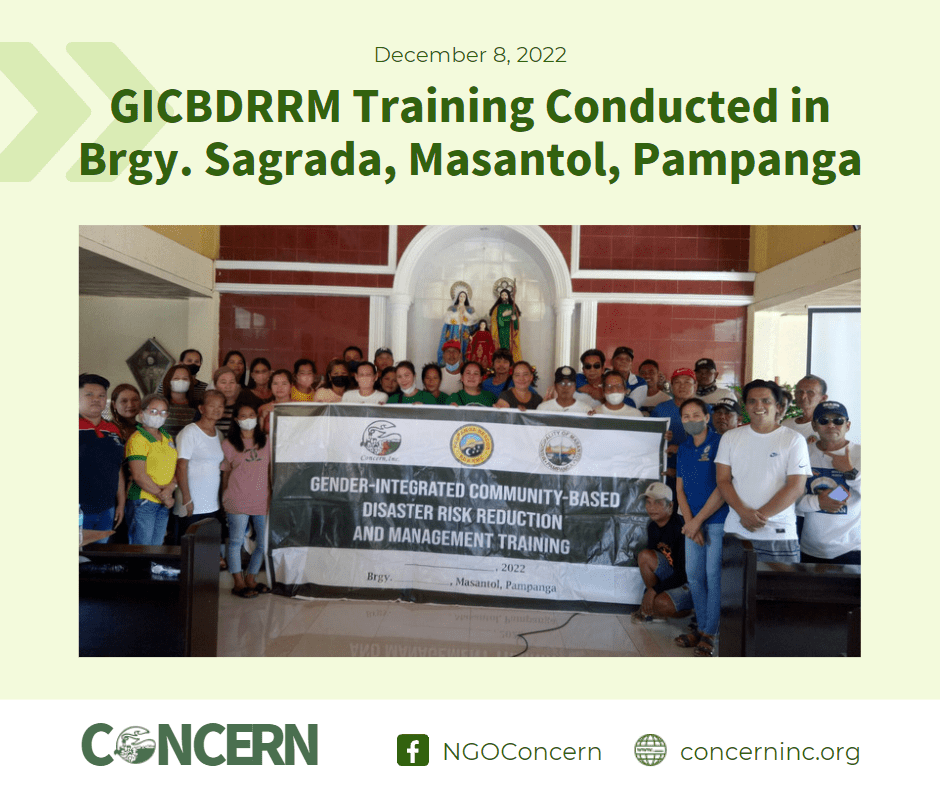
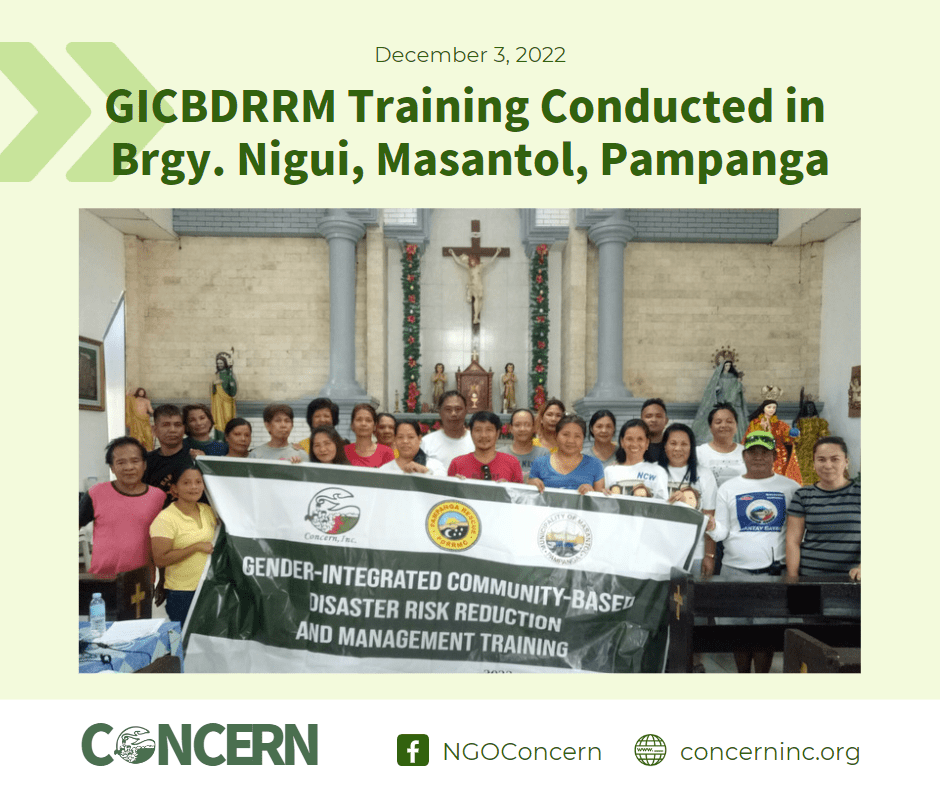
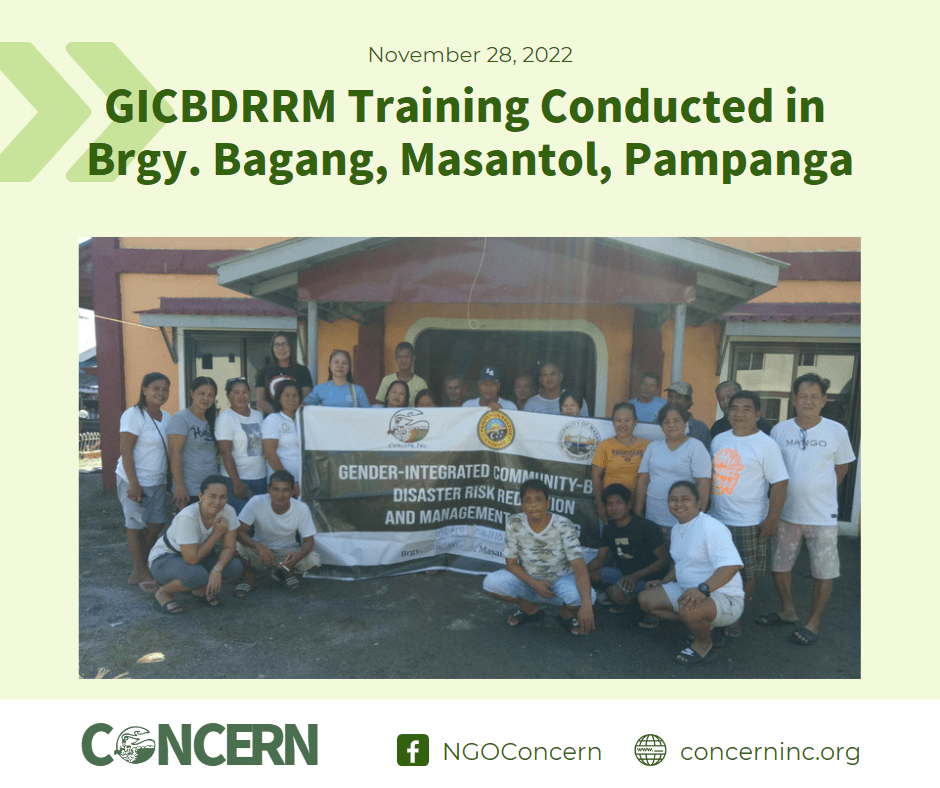
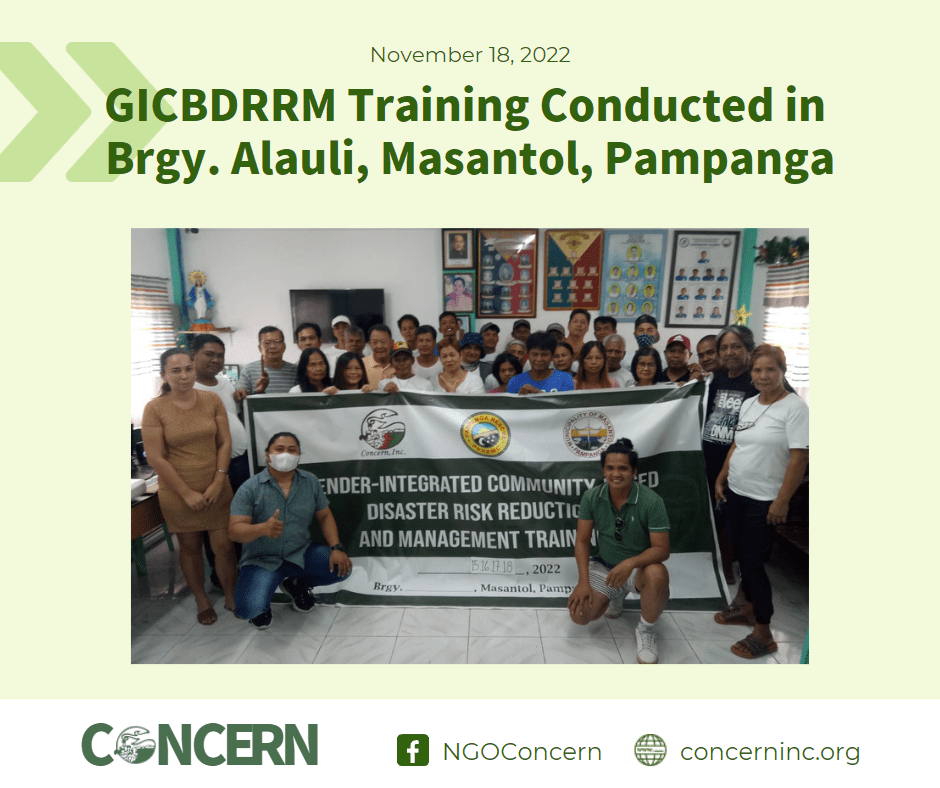
CONCERN, through the support of the Pampanga PDRRMO and the Masantol MDRRMO, conducted capacity-building sessions on Gender-Integrated Community-Based DRRM from November 15 to December 15, 2022 in six barangays along the leftbank of the Pampanga River, which are affected by flooding.
The participants learned about disaster risk reduction, climate change and gender, and the importance of disaster preparedness to reduce the impact of disasters in their community.
This training is part of the Capability Building for Disaster Risk Reduction Practitioners among coastal communities in Masantol, Pampanga, funded by the Pampanga Provincial Disaster Risk Reduction Management Office, and implemented with the support of the Municipality of Masantol.
We are reaching out to our networks, partners, volunteers, and the public to generate resources, goods, and support for the families affected by the recent floodings in Misamis Occidental due to the strong rains brought about by the Shear Line event experienced by our countryfolk in different parts of the country. We accept donations in cash thru:
Metrobank: Account Name: Center for Emergency Aid, Rehabilitation and Development Inc. Account Number: 007-296- 51099-4 and GCASH: Proleta Gomez / GCASH#: 0956 – 816- 0435
For in kind donations, our drop off points are in: Lot 12, Road 3, Block 3, Phase 1, St. Jude Village, San Agustin, City of San Fernando, Pampanga and Door 8, Dimson Apt., Tinikling St., Lanzona Subdivision, Matina Crossing, Davao City.
As of the moment, survivors in and outside evacuation centers are in need of food, water, clothing, and hygiene items.
This response is in partnership with People Based Mindanao Disaster Risk Reduction Network (PBMDRRN), a collection of individuals, organizations, institutions who are committed to respond to those affected by hazards and disasters in Mindanao.
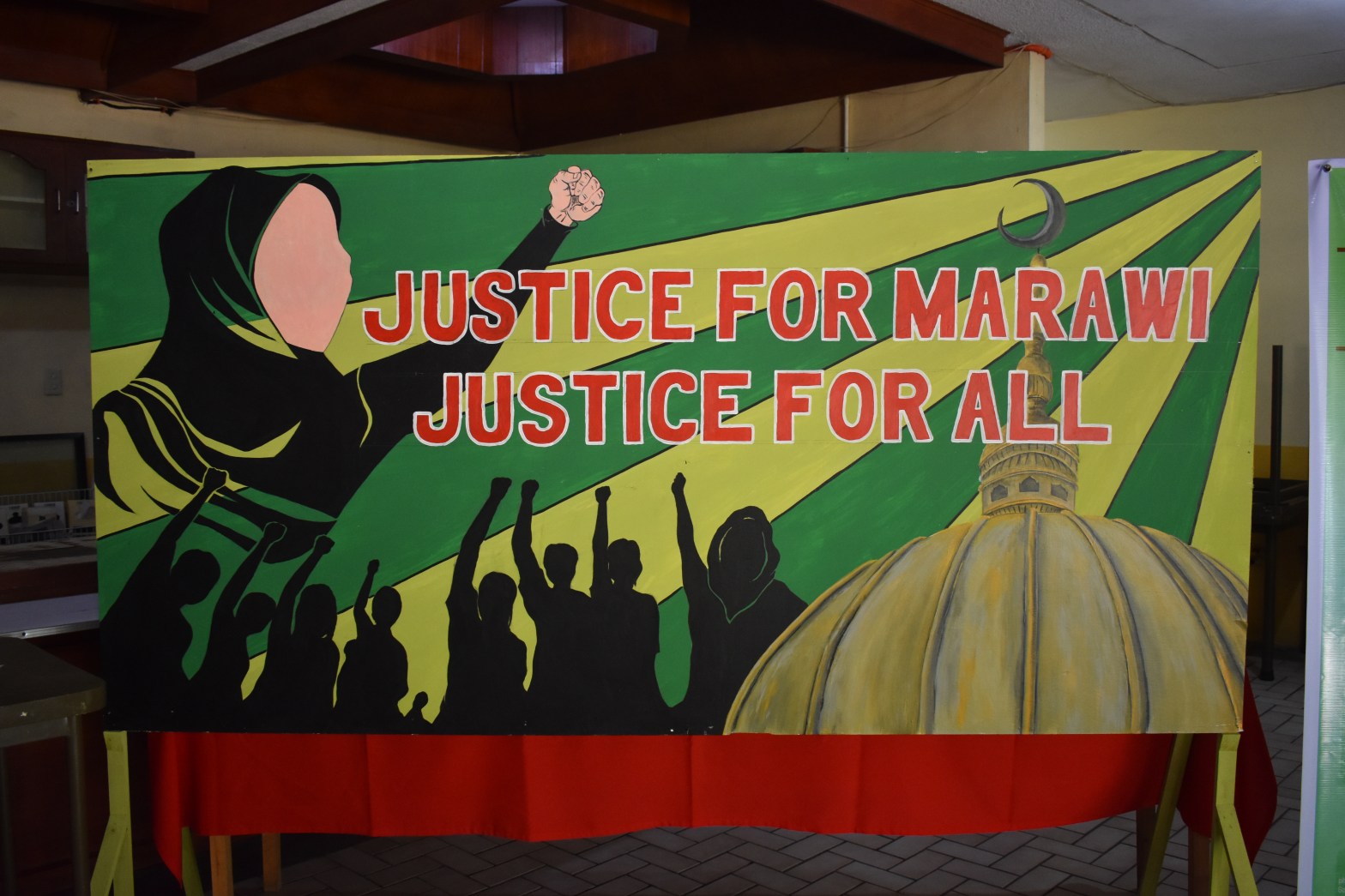
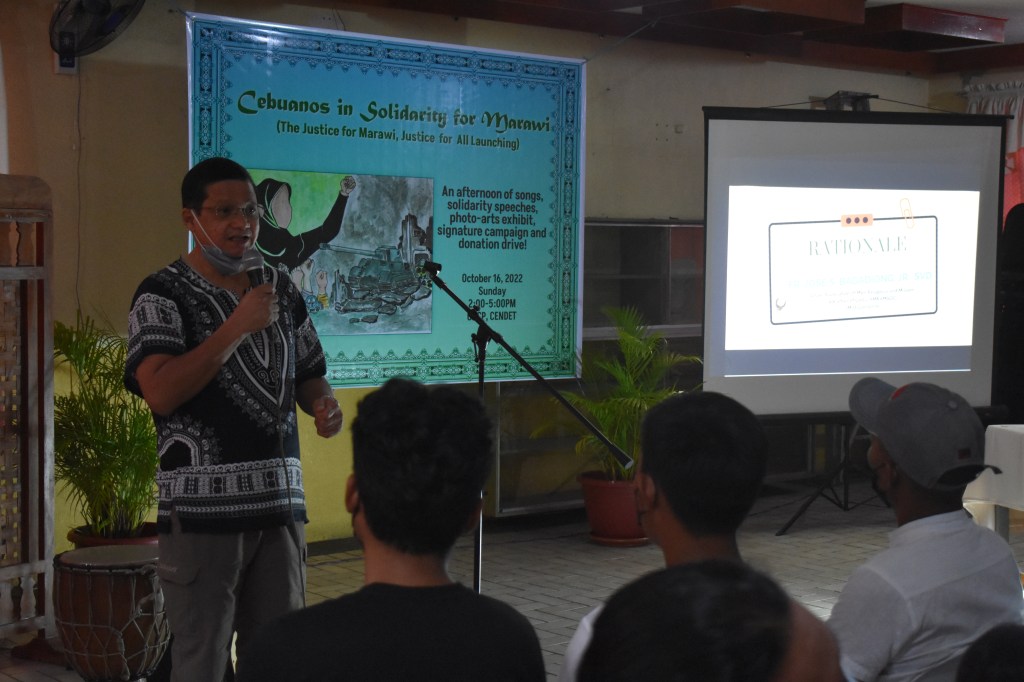
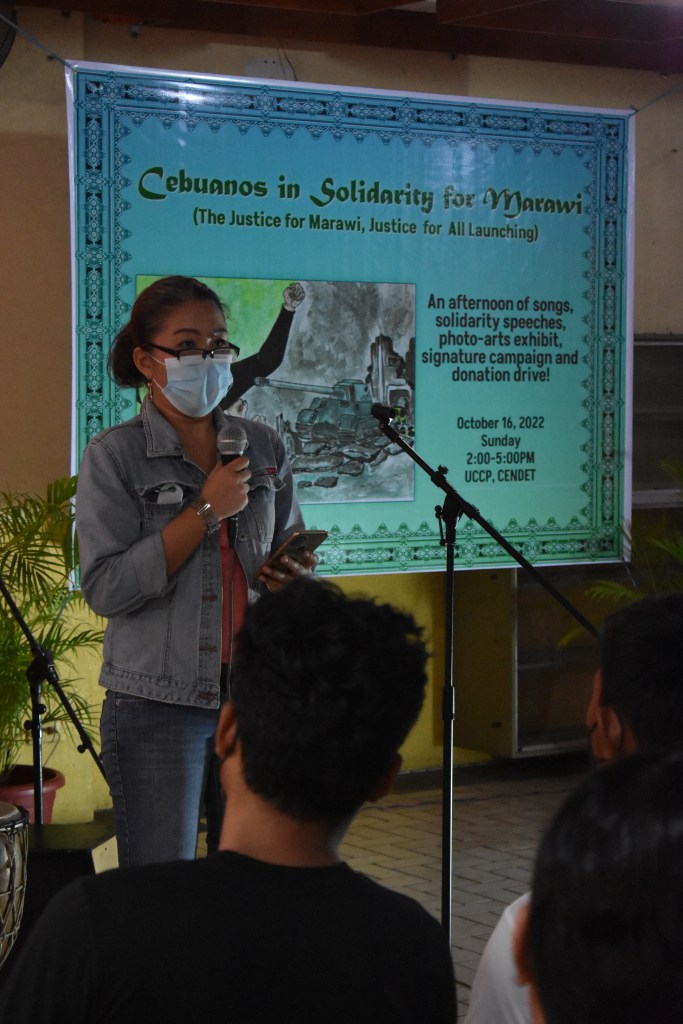
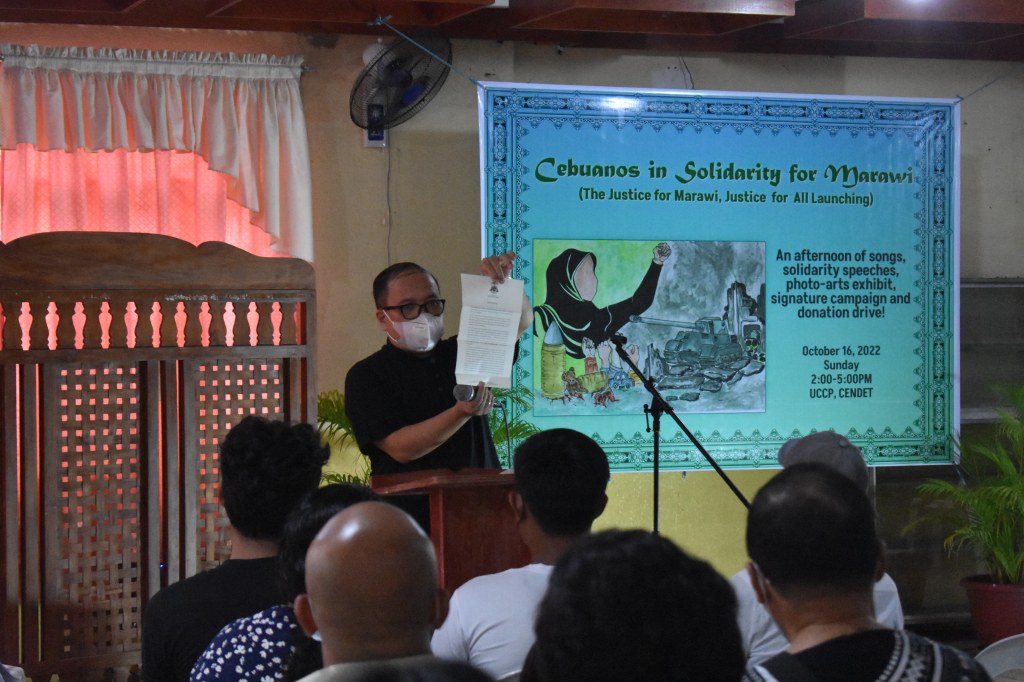
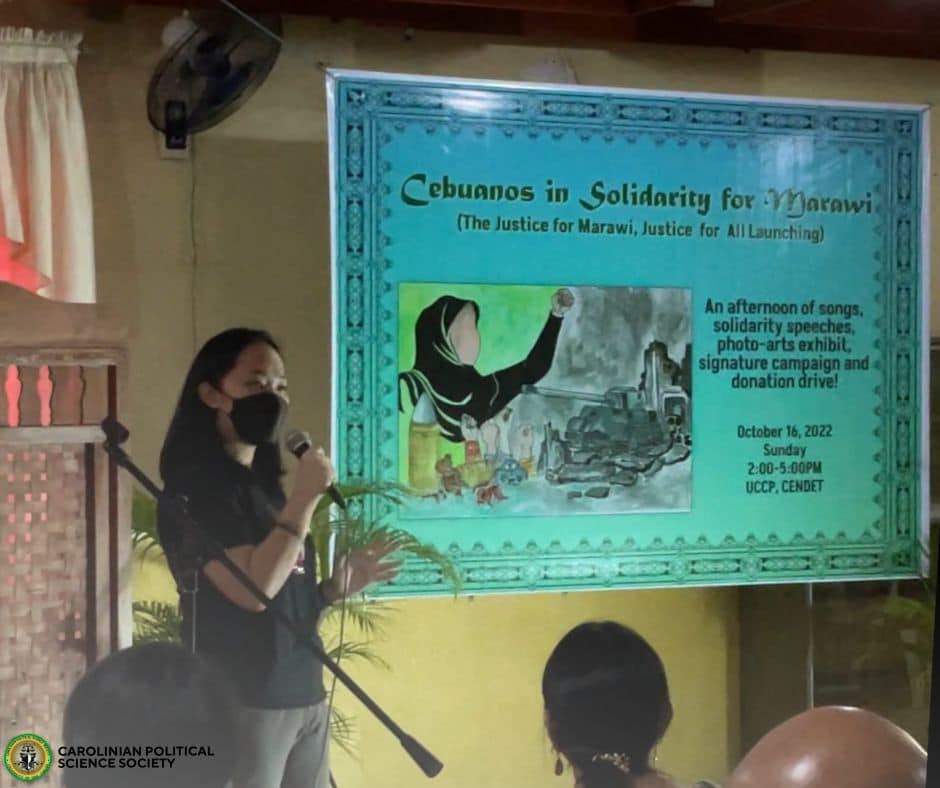
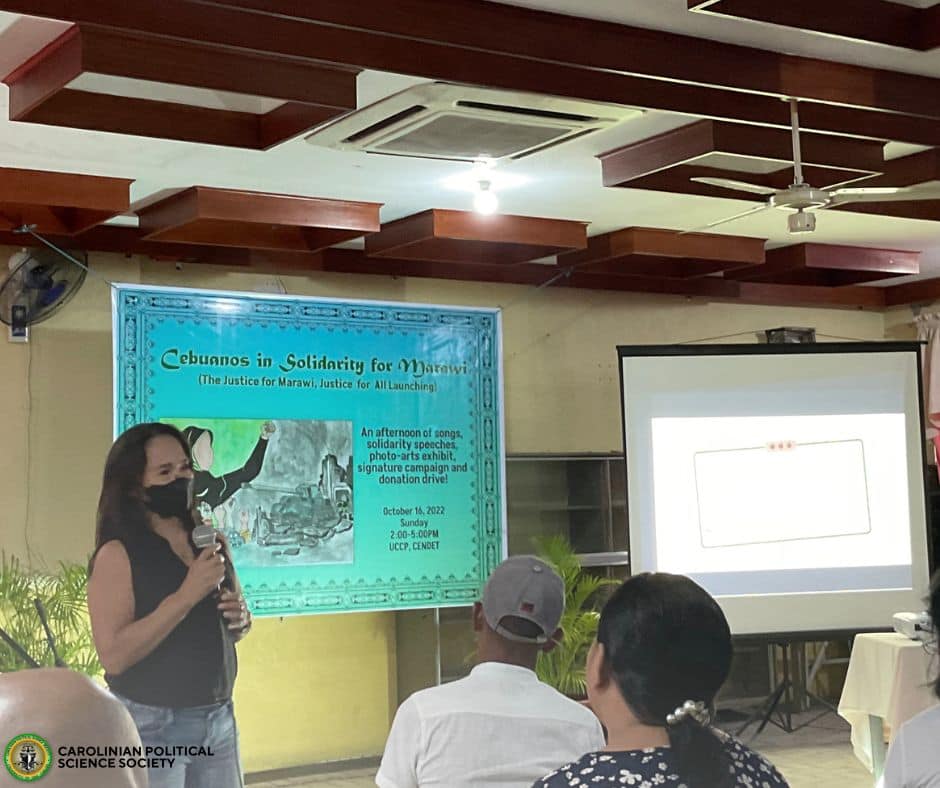
Civil society organizations in Cebu, with the support of We Effect, convened to express solidarity and raise support for the Marawi Siege victims on October 16, 2022 at the UCCP-CENDET in Cebu City.
The activity was also held to launch the “Justice for Marawi, Justice for All” campaign in Cebu. It featured a photo exhibit, cultural performances, signature campaign and solidarity messages from the Association of Men Religious and Mission Societies of Cebu (AMRAMSOC), Kilusan para sa Pambansang Demokrasya, KILUSAN-Cebu, Commission on Interfaith Dialogue of Archdiocese of Cebu, Muslim Council of Elders Visayas (Region 6, 7 & 8), Carolinian Political Science Society (CPSS), Independent Vendors for Empowerment and Development-IVEND and CONCERN.
The activity was organized to commemorate the Marawi Liberation Day on October 17, 2017 when President Rodrigo Duterte declared the “liberation” of Marawi after the terrorist group leaders have been killed. Five years have passed but the victims of the Marawi Siege are still displaced.
The campaign – Justice for Marawi, Justice for All – calls for the safe and dignified return to the city through people’s participation in the Marawi Rehabilitation process. They also call on the government for truth, justice, and accountability for the impacts of the Marawi Siege.
Fr. Jose S. Bagadiong, Jr, SVD Chair, Association of Men Religious and Mission Societies of Cebu (AMRAMSOC) Justice for Marawi Justice for All JMJA Convenor
Ms. Emalyn Aliviano Spokesperson, Kilusan para sa Pambansang Demokrasya, KILUSAN-Cebu
Rev. Fr. Alvin C. Raypan for Archbishop Jose S. Palma, DD Chair, Commission on Interfaith Dialogue, Archdiocese of Cebu
Imam Najeeb M. Razul Chairperson, Muslim Council of Elders Visayas (Region 6, 7 & 8)
Ms. Kezea Katrina Andrada President, USC, Carolinian Political Science Society (CPSS)
Ms. Wilma Cabo President, Independent Vendors for Empowerment and Development-IVEND
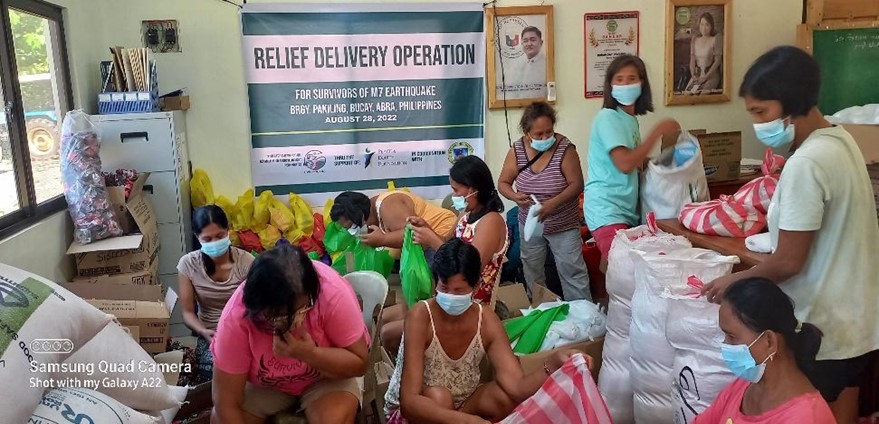
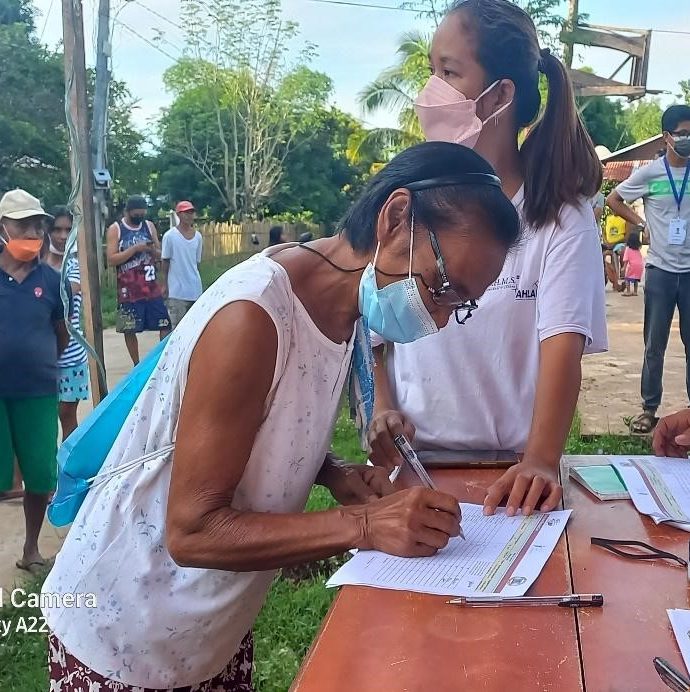
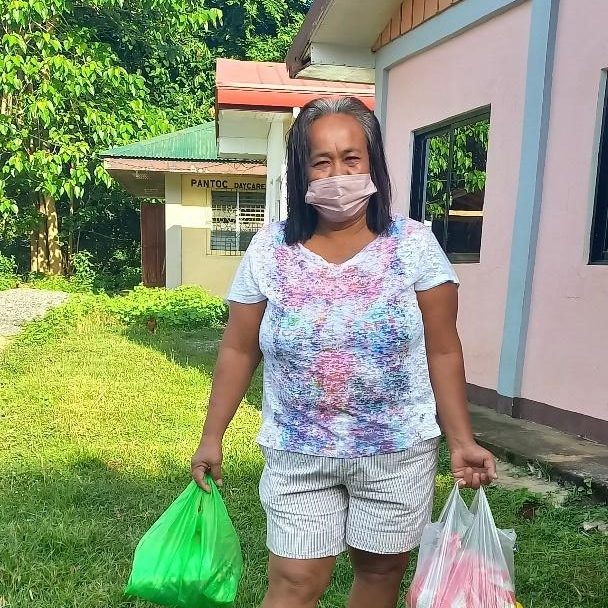
CONCERN, with the support of the Peace and Equity Foundation (PEF), and together with the local government of Bucay, Abra, extended assistance to 305 families affected by the M7.0 Earthquake that hit northern Luzon on July 27, 2022.
At 8:43 AM, 27 July 2022, a major Magnitude (Mw) 7.0 earthquake shook the provinces in northwestern Luzon and adjacent areas including Metro Manila. The earthquake has an epicenter located 17.64°N, 120.63°E – 003 km N 45° W of Tayum (Abra), and a depth of 17 kilometers. The earthquake set off landslides in the mountainous region and caused damage to property and infrastructure. In Bucay, Abra, there were 6,226 families or 20,522 individuals affected.
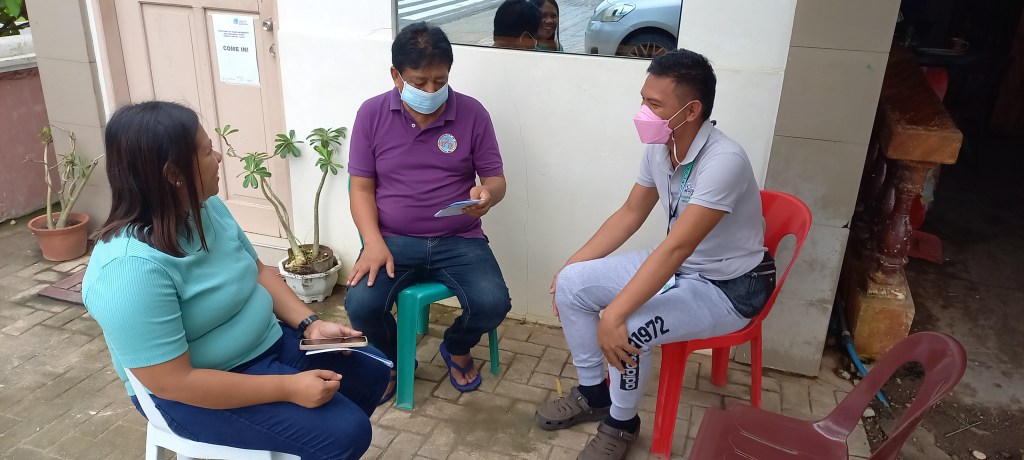
The Relief Delivery Operations (RDO) provided affected communities with basic food and non-food items, including hygiene kits to alleviate the dire condition of those displaced inside and outside the evacuation center. The implementation of the project included the following phases – data gathering, planning, data validation and beneficiary selection, canvassing of goods, procurement of goods, repacking, and distribution.
CONCERN is grateful for the support of PEF (Peace and Equity Foundation) for the Relief Delivery Operation at Brgy. Pakiling in Bucay, Abra. CONCERN also appreciates the support of the Municipality of Bucay and BLGU of Pakiling for assisting with the implementation of the project.









 Center for Emergency Aid, Rehabilitation and Development (CONCERN) Inc.